6413 Riverside Street, Abbotsford, V4X 1T9
E-mail us: [email protected]
24 Hour Service - 7 Days a Week

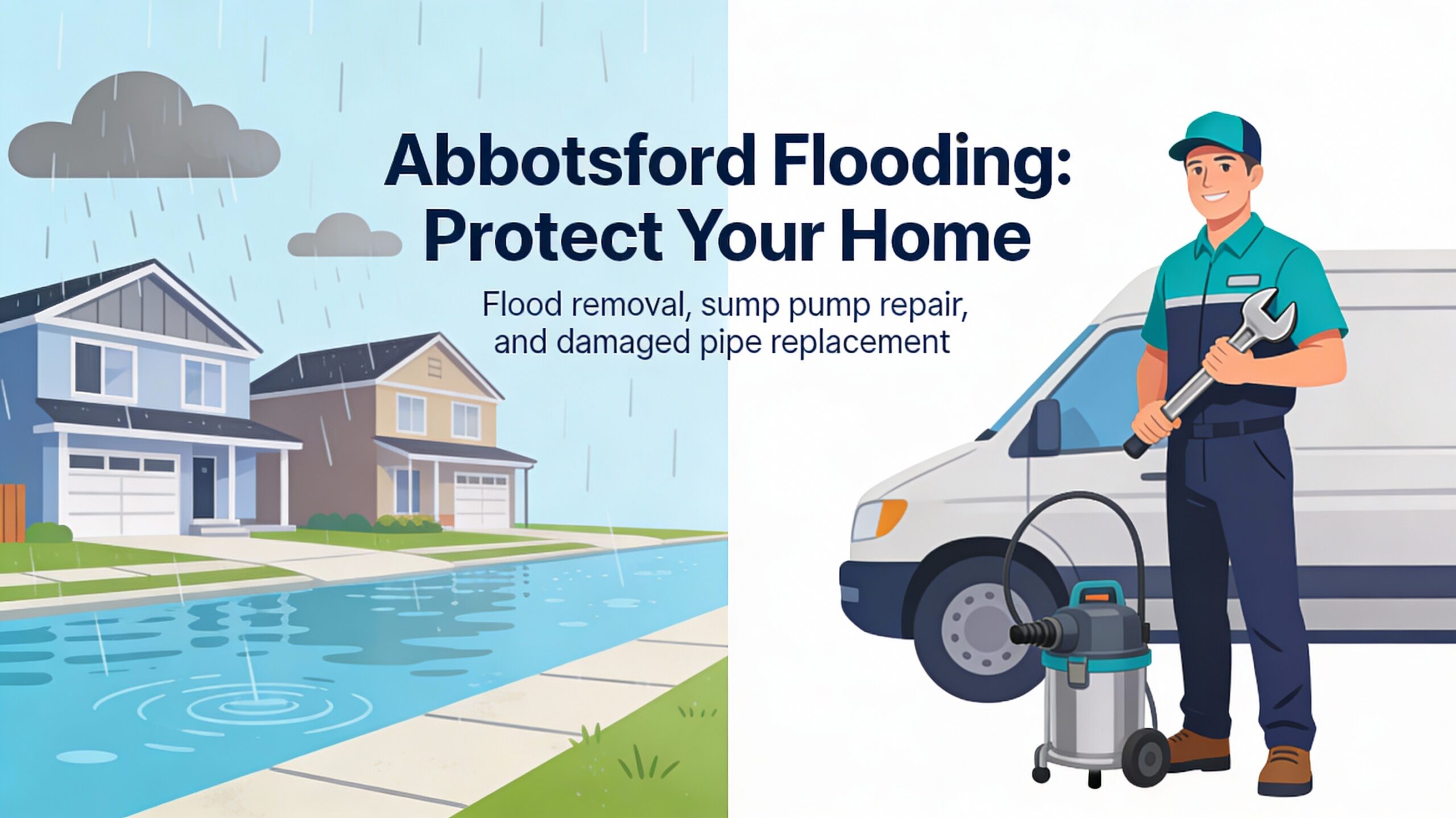
Abbotsford flooding has become an increasingly serious concern for homeowners and businesses throughout the region. With the Fraser River in close proximity and BC’s unpredictable weather patterns, understanding flood risks and implementing proper prevention strategies is essential. This comprehensive guide explores everything you need to know about Abbotsford flooding, from prevention and damage assessment to professional recovery solutions including flood removal services, sump pump repair, and repairing damaged pipes after water intrusion.
Abbotsford flooding represents one of the most significant natural disasters affecting the Fraser Valley region. The city’s proximity to the Fraser River, combined with its relatively low elevation and clay soil composition, creates a perfect storm for flood vulnerability. Recent years have seen multiple major flooding events that have devastated homes, damaged infrastructure, and displaced families.
As documented by Vancouver Sun, flooding has impacted Fraser Valley farmers significantly. Global News documented Highway 1 closures due to flood conditions, while the CBC reported on federal response efforts. CTV News warned that situations remain fragile, while the City of Abbotsford has established comprehensive flood response programs. CityNews covered residents’ recovery efforts in detail.
Understanding your property’s flood risk is the first step toward protection. Properties within the flood plain face significantly higher risks and may require special insurance coverage. Even properties outside designated flood zones can experience water intrusion during major events through groundwater seepage, overland flooding, or municipal system backup.
Multiple factors contribute to Abbotsford flooding risks, creating a complex situation that requires comprehensive understanding and preparation.
Abbotsford’s location in the Fraser Valley places it downstream from significant water sources. Rapid snowmelt in the BC interior during spring months increases Fraser River flow dramatically. Heavy rainfall events, increasingly common due to climate change, overwhelm the region’s drainage infrastructure. The area’s clay soil composition has poor water absorption rates, causing surface water to accumulate rather than drain naturally. These environmental conditions combine to create recurring flood scenarios that challenge property owners regardless of prevention efforts.
Increased urban development has reduced natural wetland areas that historically absorbed floodwaters. Storm drain systems, designed decades ago for historical rainfall patterns, now face water volumes exceeding their capacity. As Abbotsford continues expanding, developed areas replace permeable land with impermeable surfaces like concrete and asphalt, accelerating water runoff and overwhelming municipal infrastructure. This combination of factors means that modern Abbotsford flooding events are often more severe than historical precedents.
Climate change is increasing both rainfall intensity and flooding frequency across British Columbia. Weather patterns are becoming less predictable, with unprecedented rainfall events occurring without warning. Earlier snowmelt combined with spring rainfall creates peak discharge periods that challenge river management systems. Property owners must assume that future flooding events will be more severe than historical records suggest, making comprehensive preparation essential.
While you cannot prevent flooding entirely, implementing proper prevention measures significantly reduces the likelihood of water entering your home and causing damage.
Basement waterproofing is one of the most effective defenses against Abbotsford flooding. Interior waterproofing applies sealants to basement walls, creating a barrier against water intrusion through foundation cracks. Exterior waterproofing involves excavating around your foundation to install drainage membranes and weeping tile systems that redirect groundwater away from basement walls. Combined approaches offer maximum protection. Weeping tile systems specifically designed for high water table conditions direct groundwater safely away from your foundation before pressure builds up.
A properly functioning sump pump system is essential in Abbotsford. Sump pumps collect water that accumulates in your basement’s sump pit and pump it outside and away from your foundation. Primary pumps handle normal groundwater; backup pumps activate if the primary fails. Battery-powered backups maintain protection during power outages—a critical consideration during storms when power failures are common. Many flood removal situations could have been prevented with properly maintained sump pumps.
Surface grading should direct water away from your home. The ground within 10 feet of your foundation should slope downward at least 6 inches per 10 feet of distance. French drains, dry wells, and surface drainage channels manage surface water runoff effectively. Gutter and downspout systems should extend 4-6 feet away from your foundation, directing roof water to appropriate drainage points. Regular inspection and cleaning of these systems prevent clogging that allows water to pool near your foundation.
Cracks in your foundation are direct pathways for water intrusion during Abbotsford flooding. Small hairline cracks should be sealed with polyurethane or epoxy injections. Larger structural cracks require professional assessment to ensure they don’t indicate foundation movement requiring more comprehensive repairs. Regular foundation inspection catches developing cracks before they become serious water entry points.
Your sump pump system is your last line of defense against Abbotsford flooding. Understanding how it works and performing regular maintenance ensures it operates when you need it most.
Sump pump systems collect water that accumulates below your basement floor through perforated pipes (weeping tile) installed around your foundation. This water collects in a sump pit, where a float switch activates the pump when water level rises. The pump forces water out of your home through a discharge line extending well away from your foundation. Check valves prevent water from flowing backward into the pit when the pump stops. In Abbotsford, where groundwater levels are consistently high, sump pumps run frequently—sometimes continuously during heavy rainfall periods.
Primary sump pumps handle normal operational demands under typical conditions. However, during major Abbotsford flooding events when groundwater is exceptionally high, primary pumps may struggle to keep up. Backup pumps activated by secondary float switches engage when water level exceeds normal ranges. Battery-powered backups are essential because storms causing major flooding often knock out electrical power. Without backup systems, your basement floods immediately when the primary pump fails or power is lost.
Test your sump pump monthly by pouring water into the sump pit to activate it. The pump should start automatically and discharge water until the pit empties. If the pump doesn’t start or water level doesn’t drop, call a professional immediately for repair. Fixing sump pumps before problems arise prevents emergency situations during flooding events.
Clean sump pits annually to remove sediment, debris, and mineral buildup. Inspect discharge lines for kinks, cracks, or disconnections that prevent water removal. Clean pump intake screens to ensure unrestricted water flow. Check battery backup systems twice yearly to ensure they’re holding a full charge. Have professional inspections annually to identify wear requiring replacement before failure occurs.
High-capacity pumps designed for flood conditions can move more water per hour than standard residential pumps. Combination systems with submersible primary pumps and pedestal backup pumps offer redundancy and increased capacity. Water-powered backup pumps use municipal water pressure to activate, requiring no electricity or batteries. Alarm systems alert you when sump pit water levels exceed normal ranges, allowing early intervention before flooding occurs.
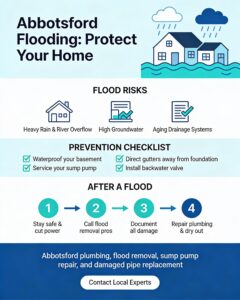
When Abbotsford flooding does occur, rapid response minimizes damage and prevents secondary problems like mold growth and structural deterioration.
Safety is the priority immediately after discovering water intrusion. If water level is rising, evacuate to higher ground and contact emergency services. If water has receded, begin documentation immediately by photographing and videotaping all damage—this evidence is essential for insurance claims. Do not enter flooded areas if electrical systems are still energized; contact your electrical utility first.
Open windows and doors to maximize ventilation, helping water evaporate faster and reducing mold growth risk. Remove wet items to dry areas. Extract standing water using pumps or wet vacuums, prioritizing areas where water is deepest. Water removal must happen quickly—standing water creates mold within 24-48 hours. Professional flood removal services have industrial-grade equipment removing water much faster than homeowners can manage alone.
After removing standing water, comprehensive drying prevents structural damage. Moisture meters measure water content in walls, flooring, and structural components. Dehumidifiers and air movers directed at wet surfaces accelerate evaporation. Depending on flooding severity, drying can take weeks. Professional contractors monitor moisture levels throughout this process, ensuring complete drying before reconstruction begins.
Mold grows rapidly in moist environments, creating serious health hazards. Even after water removal, lingering moisture allows mold to flourish. Antifungal treatments applied to affected areas inhibit mold growth. HEPA air filtration removes mold spores from the air. Professional mold remediation removes mold-affected materials thoroughly and safely, preventing both health risks and future recontamination.
Floodwater isn’t clean water—it contains sewage, chemicals, and dangerous pathogens. Any material contacted by flood water requires removal or thorough cleaning. Drywall absorbs water and provides ideal conditions for mold growth, necessitating removal and replacement. Carpet and padding typically require replacement rather than salvage. Furniture and personal items contaminated by flood water should be discarded unless sanitization proves feasible. Professional cleanup contractors understand contamination risks and follow proper protocols.
Flooding doesn’t just damage walls and furnishings—it often damages your plumbing system itself. Water pressure, debris, and shifting soil can crack, break, or displace pipes, requiring professional assessment and repair.
Flooding causes multiple types of pipe damage. Physical damage includes cracks and breaks in rigid pipes from pressure changes or debris impact. Flooding can shift soil supporting pipes, causing sagging or separation at joints. Corrosion accelerates when pipes remain wet for extended periods. Frozen water inside pipes during winter flooding can rupture pipes as ice expands. All of these conditions require professional evaluation and repair.
After flooding, professional plumbers use camera inspection systems to evaluate pipe conditions. These cameras travel through pipes, displaying real-time video of internal conditions. Camera inspections reveal cracks, breaks, separation, corrosion, and debris accumulation that would go undetected by visual inspection alone. This assessment determines which pipes need repair and guides restoration planning.
Repairing damaged pipes depends on damage type and severity. Small cracks can be sealed using epoxy patching compounds. Larger cracks require section replacement. Pipes with separation at joints need re-coupling to restore watertight connections. Severely corroded pipes require complete replacement. Abbotsford plumbing professionals assess each situation individually, recommending appropriate solutions balancing cost and durability.
For extensive damage, trenchless repair technology avoids excavation, reducing landscape disruption and labor costs. Pipe bursting technology breaks old pipes while simultaneously installing new ones. Epoxy pipe lining creates new interior pipe surfaces without excavation. These methods work well for some situations but not all, so professional assessment guides technology selection.
Even after repairs, water quality concerns persist. Sediment, rust, and contamination may remain in pipes. Flushing your entire plumbing system removes accumulated debris. Installing water filters provides additional purification. Having water quality tested ensures safety before returning to normal consumption. Professional plumbers can coordinate testing and remediation.
While some water damage response can be DIY, professional expertise becomes essential for comprehensive plumbing assessment and restoration. Professional Abbotsford plumbing contractors bring specialized knowledge, equipment, and experience that homeowners cannot replicate.
Professional plumbers offer 24/7 emergency response when flooding strikes. They arrive quickly with equipment for immediate water extraction and temporary damage mitigation. Emergency response prevents additional damage while comprehensive repairs are planned. Many professionals offer emergency hotlines ensuring you reach help immediately when disasters occur.
Professional assessment identifies all damage, not just obvious problems. Moisture measurement determines drying requirements. Structural assessment identifies whether framing, foundations, or other elements sustained damage. Plumbing assessment evaluates all pipes, fixtures, and connections for damage. This comprehensive approach ensures nothing is missed during repairs.
Professional contractors coordinate all aspects of restoration. They remove damaged materials, dry affected areas, perform necessary repairs, and reconstruct spaces to pre-flood conditions. Coordination with general contractors, electricians, and other trades ensures comprehensive restoration rather than piecemeal repairs. Professional project management keeps restoration moving efficiently and according to schedule.
All plumbing repairs must meet local building codes. Professional plumbers understand these requirements and ensure all work is code-compliant. When repairs are necessary for insurance claims, proper documentation and permits protect your interests. Code compliance also ensures your plumbing system functions safely and reliably for years following repair.
Flood damage is devastating financially, but insurance and disaster assistance programs provide recovery support. Understanding these resources helps maximize recovery funds.
Standard homeowner’s insurance typically does not cover flood damage, which surprises many policyholders during recovery. However, damage from backup of sewers or storm drains may be covered if water damage coverage is included. Wind and hail damage to your roof allowing rain intrusion is usually covered. Reviewing your policy determines what coverage applies to your specific situation.
Property owners in flood-prone areas should purchase separate flood insurance. These policies specifically cover damage from overland flooding. For Abbotsford residents in flood plains, lenders often require flood insurance as a mortgage condition. Even for properties outside designated flood zones, flood insurance provides valuable protection against increasingly severe flood events.
Provincial and federal disaster assistance programs provide support following major Abbotsford flooding events. The BC Provincial Disaster Financial Assistance program provides grants for uninsured losses exceeding specific thresholds. Federal disaster assistance supplements provincial support when damages are particularly severe. These programs require documentation of damage and proof that recovery costs exceeded available insurance, so thorough documentation is essential.
Immediately after flooding, create detailed documentation of all damage. Photography, videography, and written descriptions support insurance claims and disaster assistance applications. Maintain receipts for all recovery expenses. Keep contemporaneous records of repair work, materials, and labor costs. This documentation is essential for substantiating claims and maximizing recovery funds. Professional restoration contractors typically provide detailed documentation as part of their services.
Abbotsford flooding represents a serious risk that demands comprehensive preparation and professional response when disasters occur. Understanding flood risks, implementing prevention measures, and maintaining proper sump pump systems significantly reduces the likelihood of catastrophic water damage. When flooding does occur, rapid professional response minimizes damage and accelerates recovery.
Your Abbotsford plumbing system requires professional attention both before and after flooding events. Regular maintenance prevents failures during critical times. Professional inspection identifies vulnerabilities before flooding occurs. When recovery becomes necessary, experienced professionals manage the complex process of flood removal, pipe repair, and restoration to pre-flood conditions.
For fixing sump pumps, repairing damaged pipes, flood removal services, or comprehensive plumbing assessment, professional contractors in Abbotsford provide the expertise necessary to protect your home. Don’t wait until flooding strikes—prepare now, maintain your systems regularly, and develop a recovery plan. Your preparedness today can mean the difference between manageable recovery and catastrophic loss when Abbotsford flooding inevitably returns.
Protect your Abbotsford home from flooding. Contact professional plumbing services today for comprehensive assessment, prevention measures, and emergency response preparation.